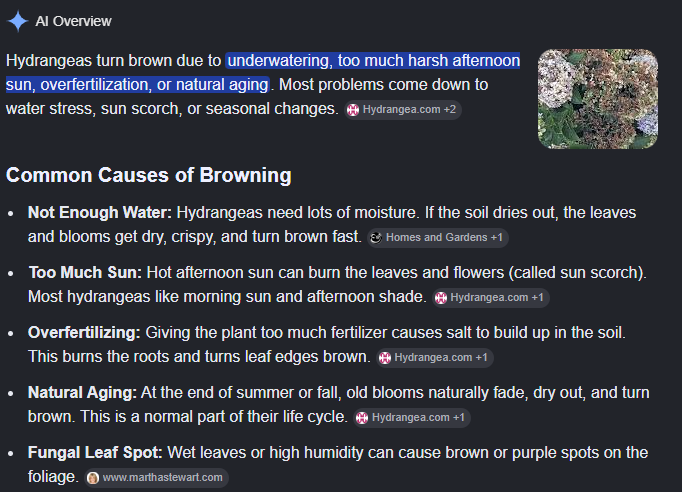
Google search results are changing. Alongside the familiar list of website links, some searches now display an AI-generated overview that brings together information from several sources.
For businesses, appearing as one of those sources can provide an additional opportunity to be discovered. However, there is no form to complete, special piece of code to install or guaranteed way to secure a mention.
Google chooses supporting sources dynamically, based on the search being made and the information it considers useful. The aim is therefore not to chase a loophole, but to make your website accessible, accurate and genuinely valuable enough to be considered.
Jump To
- What Is an AI Overview Mention?
- Start With Standard Google Visibility
- Publish Original and Useful Information
- Answer the Whole Question
- Make Your Content Easy to Understand
- Keep Your Business Information Accurate
- Avoid AI Overview Shortcuts
- Measure Your AI Overview Visibility
What Is an AI Overview Mention?
An AI Overview is a generated summary that may appear when Google believes it can help someone understand a question or explore a subject more easily.
The overview can include links to websites that support different parts of the answer. Your website might be shown as a source, linked from a particular statement or included among the pages offered for further reading.
This should not be treated as a permanent ranking position. AI Overviews do not appear for every search, and the websites selected can change depending on the wording of the question, the location of the user and the information available at that time.
It is also worth separating Google AI Overviews from wider Generative Engine Optimisation. GEO can include visibility across several AI-assisted platforms, while this guide concentrates specifically on Google Search.
Start With Standard Google Visibility
Before Google can use a page within an AI Overview, it generally needs to be able to find, crawl and index that page through its normal search systems.
Start by checking that:
- The page is publicly accessible without requiring a login
- Googlebot is not blocked by your robots.txt file or website firewall
- The page does not contain an accidental noindex instruction
- The canonical tag points to the correct version of the page
- The page is included in your XML sitemap where appropriate
- Important pages can be reached through internal links
- The content is eligible to appear in Google with a search snippet
Google Search Console can help you check whether an individual page is indexed and identify technical problems that may prevent it from appearing.
There is no separate AI Overview submission process. Good search engine optimisation remains the foundation because Google’s AI features use information retrieved from its wider search index.
Publish Original and Useful Information
Generic content gives Google little reason to select one website over another. An article that simply repeats the same advice found across dozens of other sites is unlikely to offer much additional value.
More useful content draws on genuine knowledge and experience. Depending on your business, this could include:
- Lessons learned while completing real projects
- Clear explanations of your working process
- Original photographs, examples and demonstrations
- Common problems encountered by customers
- Realistic cost and timescale considerations
- Situations where one option may be more suitable than another
- Limitations or exceptions that other articles fail to mention
For example, a generic article might say that website prices vary. A more useful article would explain which features affect the cost, what is normally included in a quotation and which ongoing expenses a business should ask about.
That additional detail gives the reader a better answer and gives Google something specific that cannot be reproduced by summarising basic information from elsewhere.
Answer the Whole Question
Google can explore several related questions while preparing an AI-generated response. A person asking about the cost of a website may also need to understand hosting, maintenance, ecommerce functionality and how long the project will take.
This does not mean creating a separate page for every slight variation of a question. It is usually better to publish one well-planned page that answers the main question and covers the genuinely relevant considerations around it.
Begin with a clear answer, then provide the context needed to understand it. Explain which factors can change the answer, who the advice applies to and when professional guidance may be needed.
Avoid hiding the useful information beneath a long introduction. Readers should be able to understand the main point quickly, while still having the option to explore the detail.
Make Your Content Easy to Understand
Your content should be structured for people first. Clear organisation also makes it easier for search systems to identify what each part of the page discusses.
Use:
- A descriptive page title
- Logical H2 and H3 headings
- Short, readable paragraphs
- Lists where they make steps or comparisons clearer
- Descriptive internal links to supporting pages
- Useful images and videos where they add context
Important information should normally be available as visible text rather than existing only inside an image, video or interactive element.
There is no need to break every sentence into a separate section or write in an unnatural style for AI systems. A page should feel straightforward and satisfying for a genuine visitor to read.
Use Structured Data Accurately
Suitable structured data can help Google understand information about your organisation, articles, products, services and local business details.
However, there is no special AI Overview schema. Any structured data you use should accurately reflect information that visitors can also see on the page.
Adding services, reviews, prices or other claims only within the code will not make the page more trustworthy and could create inconsistencies.
Keep Your Business Information Accurate
Google should be able to understand who is responsible for the website and what the business genuinely provides.
Make sure your website clearly presents:
- Your business name and contact details
- The services or products you actually offer
- The locations you genuinely serve
- Information about the people behind the business
- Relevant experience, qualifications or accreditations
- Current prices, opening hours and service details where published
Your Google Business Profile and other reputable listings should support the information shown on your website rather than contradict it.
Outdated service areas, old prices and discontinued offers can weaken the usefulness of otherwise helpful content. Regular website maintenance should therefore include reviewing important written information as well as updating software.
Avoid AI Overview Shortcuts
As interest in AI search has grown, so have claims about quick ways to secure mentions. Many of these tactics are unnecessary or unsupported.
You Do Not Need Special AI Files
Google does not require an llms.txt file, a separate AI sitemap or special machine-readable content to include a page in its generative search features.
You Do Not Need Separate AI Versions of Your Articles
Rewriting every page specifically for an AI system can create duplication and make the website harder to manage. Concentrate on improving the main page for customers.
Do Not Create Hundreds of Near-Identical Pages
Publishing a separate article for every wording of the same question is unlikely to improve quality. It can instead create thin pages that compete with one another.
Do Not Manufacture Mentions
Buying fake reviews, placing misleading recommendations or creating artificial discussions about a business is not a reliable visibility strategy. Genuine reviews and independent references should arise from real customer experiences and legitimate relationships.
Do Not Publish Unchecked AI Content
AI tools can assist with research and drafting, but the finished material still needs to be accurate, original and useful. Publishing large quantities of unedited content can introduce factual errors and repeat information already available elsewhere.
Measure Your AI Overview Visibility
Measuring AI Overview visibility is still developing. Google has begun introducing dedicated generative AI performance information within Search Console, including details about impressions, pages and countries.
The feature is being rolled out gradually, so it may not yet appear in every Search Console account.
You can also monitor:
- Changes in impressions and clicks for relevant pages
- Visits and conversions from Google organic search
- Branded searches for your company or services
- Enquiries that mention an AI-generated recommendation
- Whether important pages are being crawled and indexed correctly
Manually checking a selection of realistic customer questions can provide useful observations, but it should not be treated as a fixed ranking report. The answer and sources can change from one search to another.
Focus on Being Useful, Not Chasing the Feature
There is no guaranteed method for getting a website mentioned in Google AI Overviews. The strongest approach is also the most sustainable one: publish accurate and original information on a website that Google can access, understand and confidently present to users.
That means maintaining strong technical foundations, answering real customer questions and adding genuine experience that goes beyond a generic summary.
If you would like help reviewing whether your content and technical SEO are ready for Google’s changing search features, contact Athena Media to discuss your website and current online visibility.